


As progressive leaders and strategists meet in London to plot the fightback against populism, there is a powerful idea from the past that can shed new light on the direction the centre-left should be taking.
Abraham Maslow wrote his Theory of Human Motivation in 1943. More than eighty years later, it still provides extraordinary insight into how to understand people - or in the case of politicians, how to understand voters. It was an attempt to explain what drives human beings. He talked of ‘D’ needs - deficiency needs, and ‘B’ needs - being or growth needs.
It’s worth focusing on the phrase human motivation. Today that is more important than ever, if politicians are to navigate a world where tribal loyalties are breaking down fast. Understanding motivation is a way of forging a deeper connection with people than the transactional nature of much of politics.
Maslow never laid out his theory in a pyramid. Management consultants did that later.
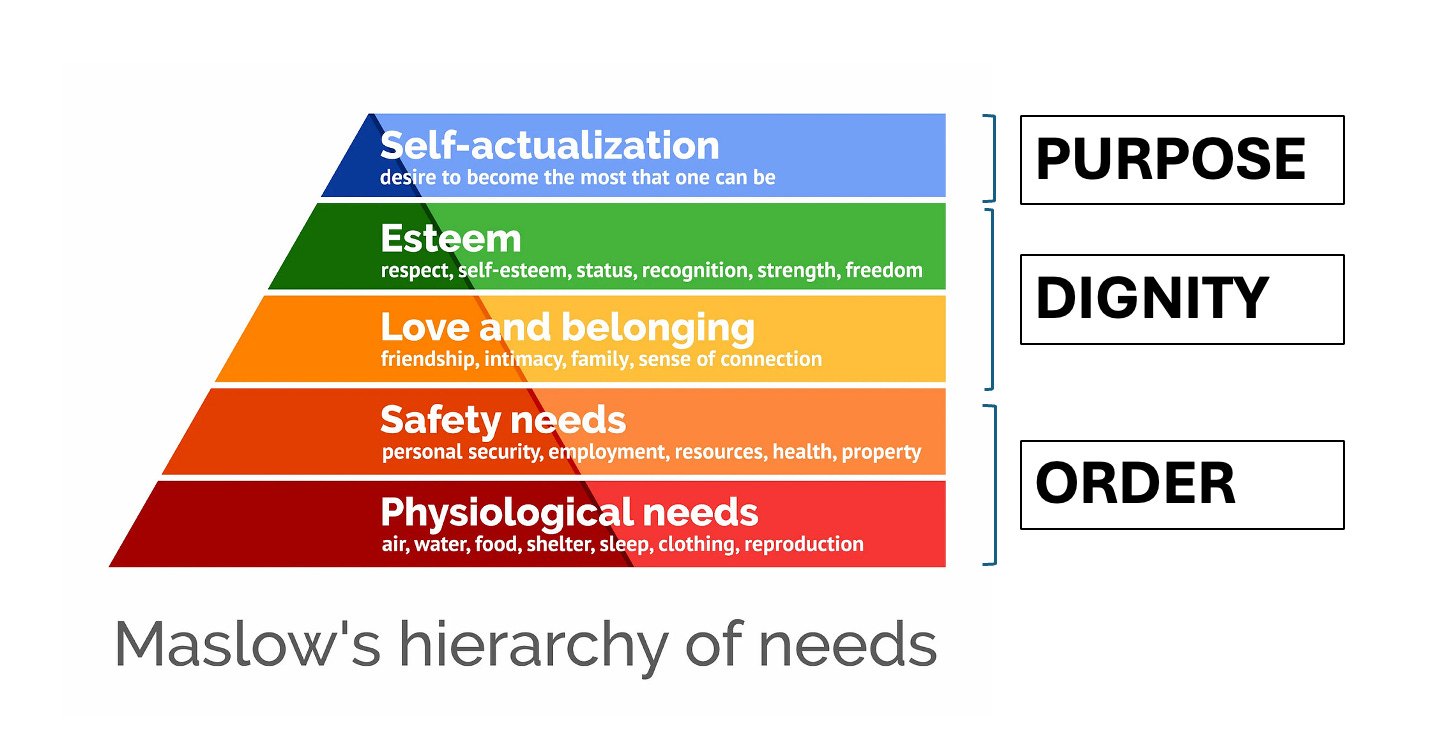
If we use Maslow’s hierarchy as a lens to examine today’s society, what becomes clear is that too many people are struggling with three types of needs: basic needs (physiological/safety), psychological needs (belonging, esteem) and aspirational needs (self-actualisation). I have grouped these needs into three categories which I think reflect how people see things today: order, dignity and purpose.
If I am honest, the left has done a bad job on all three in recent years. First, not addressing the people and places that are left behind - lives that feel out of control and lacking order and secure foundations. Second, the growing status - dignity - divide, in particular between governing elites in the cities and those in small, often run-down towns. Third, the left has all but given up on the politics of aspiration, too often preferring identity politics to empowering people to make the best of themselves.
The centre-left leaders who are starting to win – including Carney, Albanese, Starmer, Sanchez, Frederiksen – are starting to rectify these failings. But there’s a long way to go, and with AI hurtling towards us and social media stealing our attention, it is only a new politics of human potential that will allow people to thrive in the future.
Let’s take the three needs in turn.
Order: Basic needs
Too many feel their basic needs are not met. They are stuck in a cycle of survival, unable to access, think about or act on their higher needs. The growth of food banks, the recent increase in rough sleeping, insecurity at work, increasing poor health means that for many, there is no basic foundation of security. The number of emergency food parcels has gone up from 2800 in 2006 to 3.12 million in 2024, according to the charity, Trussell Trust. More than 4.5 million children are growing up in poverty. 104,510 people live in temporary accommodation; with 3,898 rough sleepers - more than double the numbers in 2010. More than 1 million people in 2024 were working zero hours contracts. And there are nearly one million young people not in education, employment or training (NEET).
The centre-left needs to change if it is to address these basic needs. That includes designing a comprehensive anti-poverty strategy. In the last year there has been a big, progressive argument around abundance. The idea that if we build more homes, infrastructure and cheaper energy, and build it faster, then people won’t be fighting over scarcity. Ezra Klein has been leading the charge in the United States. He makes the case that Democrat states take the longest to get anything done because they are too often gold-plating legislation and regulations. In Britain, there has been a compelling essay by the Centre for British Progress on a similar theme. Labour Together have written powerfully about how to build infrastructure faster including Heathrow’s third runway, and how to tackle the bottlenecks that are holding the country back. Reform of the state must become a centre-left issue - and not the preserve of the Elon Musks. I have co-written a piece with Morgan Wild - the progressive case for state reform - on why our bold ambitions will only be delivered with radical reform of how government works.
Dignity: Psychological needs
What Maslow called esteem needs, includes a set of powerful ideas around status, recognition - in short, dignity. Do I matter in society? Do I matter to others?
This is the most basic psychological need.
Too few people feel they are truly respected.
The current rage against the system, anger against politicians, desperation to find a disruptor, comes from this feeling. This is what I heard on the doorstep in Pittsburgh during the American elections, and in communities across England during the British General Election.
It is a sentiment captured by the work of Michael Sandel. “People want to be needed. They want to feel that the work they do matters. They want to feel respected, not just as workers, but as citizens.”
Sociologist, Arlie Hochschild, author of Strangers in their Own Land coined the phrase ‘deep story’ having immersed herself in the lives of people in Southern Louisiana. The ‘deep story’ she unearthed there was of many working class Americans feeling they are waiting in line for the American dream. But progress has stalled because, as it seemed to them, others are cutting in line ahead of them: immigrants, refugees, single mothers.
In her most recent book, Stolen Pride: Loss, Shame and the Rise of the Right, based on years of listening to people in Pikeville, Kentucky, she describes how many white working-class Americans, who are now Trump supporters, feel they’ve lost pride. That might be losing pride in their community, their work, their gender role, national identity or cultural values. The loss of pride she says is often accompanied by a feeling of shame. Instead of expressing that shame, people express anger, resentment or defiance especially towards groups they perceive as causing their loss or receiving more respect than them. This fuels populist rage and support for those who will help them fight back. Her view is that, just as we live in a material economy, we also live in an equally important pride economy.
JD Vance, who grew up nearby in Kentucky, describes vividly in Hillbilly Elegy, the divide between metropolitan and rural America: “Americans call them hillbillies, rednecks or white trash. I call them neighbours, friends and family.”
I heard broadcaster and ideologue Tucker Carlson deliver these words at a huge MAGA rally at Madison Square Gardens in New York: “They tell you, the people who can actually change a flat tyre, who pay your taxes, and work 40 hours a week, that you are somehow immoral. We have a message for them: you are not better than us, you are not smarter than us.”
And I was struck by Trump’s unusual banner headline on the landing page of his Presidential campaign website: ‘they're not coming after me, they're coming after you and I'm just standing in their way.’
Trump’s appeal was in part that of protector and advocate for those who feel shame. Nigel Farage is now trying to do the same.
Many progressive parties - notably the Democrats in the States - are a long way from understanding and responding to these psychological needs and the intersection of class, education and urban/rural divides. My recent Substack highlighted the education divide between the college educated and the rest. This has to be addressed more systematically across the Western world or populists will continue to take advantage of those who feel patronised and have few prospects of getting on in life.
There is a large body of work and political interest in the ideas around the politics of respect and dignity. From Gene Sperling’s book on Economic Dignity, to Michael Sandel’s, The Tyranny of Merit, and Daniel Markovits, The Meritocracy Trap.
There has also been a lot of serious analysis of inequalities that fuel resentment.
The Resolution Foundation Economy 2030 inquiry has twin aims of tackling low productivity and growth and dealing with regional inequalities. Other work such as the Michael Marmot review of health inequalities are important for setting out an agenda for powerful reform.
Others are starting to think deeply about the idea of contribution. How we restore the contract between citizen and state - a contract that goes to the heart of recognition - and start rewarding not just those who have paid in all their lives, but those who give back to their communities.
Purpose: Self-fulfilment needs
The final stage in Maslow’s hierarchy of needs is self actualisation - the ability to be the best version of yourself. To find real purpose in life. This is the biggest blind spot of the centre-left. Providing ladders of opportunity should always be at the heart of a successful centre-left project. But currently it isn’t.
The censorious left, for example, fails to realise that a lot of what young men are doing online – for example, following a gym influencer to get fitter or a business leader to make money - is about self-improvement and not something worthy of condemnation.
In Maslow’s words: “Self actualisation is not about filling a hole - it’s about becoming more deeply who you already are.”
He went on to describe it as: “The full use and exploitation of talents, capacities, potentialities. Such people seem to be fulfilling themselves and to be doing the best that they are capable of doing.”
Within humanistic psychology, the branch of psychology founded by Maslow, the healthy personality is considered one that constantly moves towards freedom, responsibility, self awareness, meaning, commitment, personal growth, maturity, integration and change.
Two works in this sphere have had a big influence on my thinking both as a headteacher and a political strategist. The first is Flow: The Psychology of Happiness by Mihaly Csikszentmihalyi. Flow is a state of being when you are so fully immersed in a challenging activity, so much in your element, that time flies by without you realising it. In people’s work and wider life, we all need periods of flow, where we grow, get better at something and feel a deep sense of achievement. Martin Seligman’s, Flourish gets to the heart of human flourishing. He has boiled down more than thirty years research into the five essentials for self fulfilment and happiness: positive emotion, engagement, relationships, meaning, and accomplishment. How many people truly feel they have most of these in their lives today?
So what needs to happen? How do politicians reshape politics to pursue these three needs: order, dignity and purpose. It might be tempting to pursue a ‘safety first’ politics, one in which the bottom rungs of the hierarchy are dealt with first, but that would be a mistake. Maslow’s hierarchy was intended to be fluid. He believed that people need their basic needs met but at the same time want the ability to grow and develop.
This becomes clearer if you read psychologist, Scott Barry Kaufman’s compelling book, Transcend.
The hull and the sail
Kaufman is an expert on Maslow’s writings and has updated his ideas. The metaphor he uses is a boat on the ocean. The hull of the boat represents basic needs – stability and security and order. The sail of the boat represents the self-fulfilment or growth needs.
If the hull is not strong and watertight, the boat sinks. But without a sail, the boat is going nowhere, bobbing back and forth on the ocean, prey to the elements.
We all need a sail, the ability to steer our boat to the destination we want. And, in stormy waters, we need more wind in our sail to confront the elements - more training, more skill, more resilience.
If we are in a storm, without a sail, however watertight the hull, the boat will start to take in water from the rising waves - and slowly start to sink.
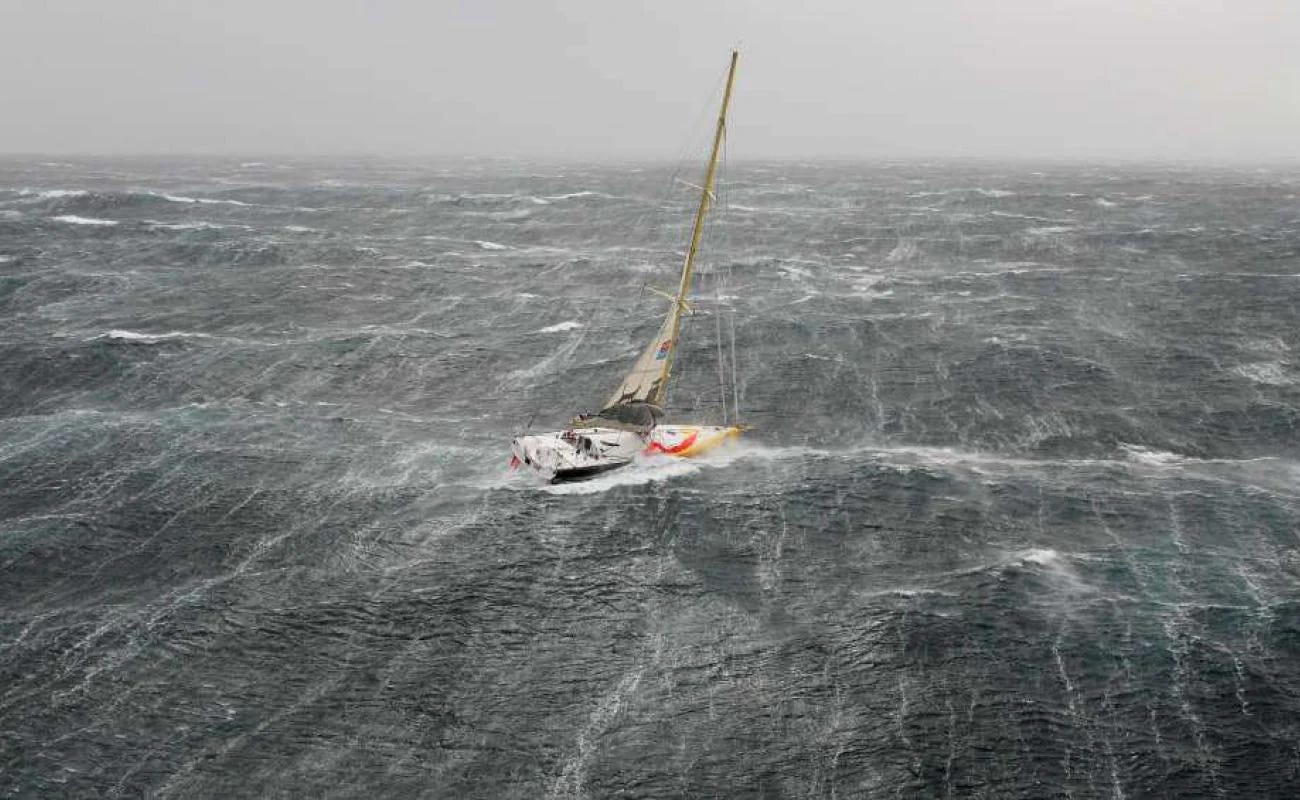
We all require wind in our sail. This was one of Maslow’s main findings. As humans we need to grow, feel things are getting better, see the land ahead. We need to venture forth, explore new possibilities to allow us to feel fully human. It is the difference between surviving and thriving.
Something terrible has happened to politics when surviving has become the limit of so many people’s aspirations.
Politicians - populists and mainstream parties - whose main message is about security, try to capitalise on the anxiety felt by those struggling with basic D needs. When that happens, hope is the casualty - washed up, barely breathing on the shoreline.
A politics of human potential is needed instead. We need to tackle the basic needs as well as the status needs – the dignity of all– but most of all the centre-left needs to show that a better life is in reach.
This is the politics of aspiration. A project to maximise human potential, to put wind in people’s sails again. It is the best, perhaps the only route, to turning the tide against the populists.
I enjoyed reading this article - it has some solutions and is more refreshing than the vast bulk, which make me feel more depressed!
Really interesting thanks Peter. Which organisation/s do you think are best exemplifying this “New Centre-Left” style or thinking? You named some thinkers and a handful of orgs, but where would one go to put this thought into action?