
How to win - and lose - the big arguments
Crumbling support for ID cards, just days after they were announced, shows the importance of getting out there and winning hearts and minds.

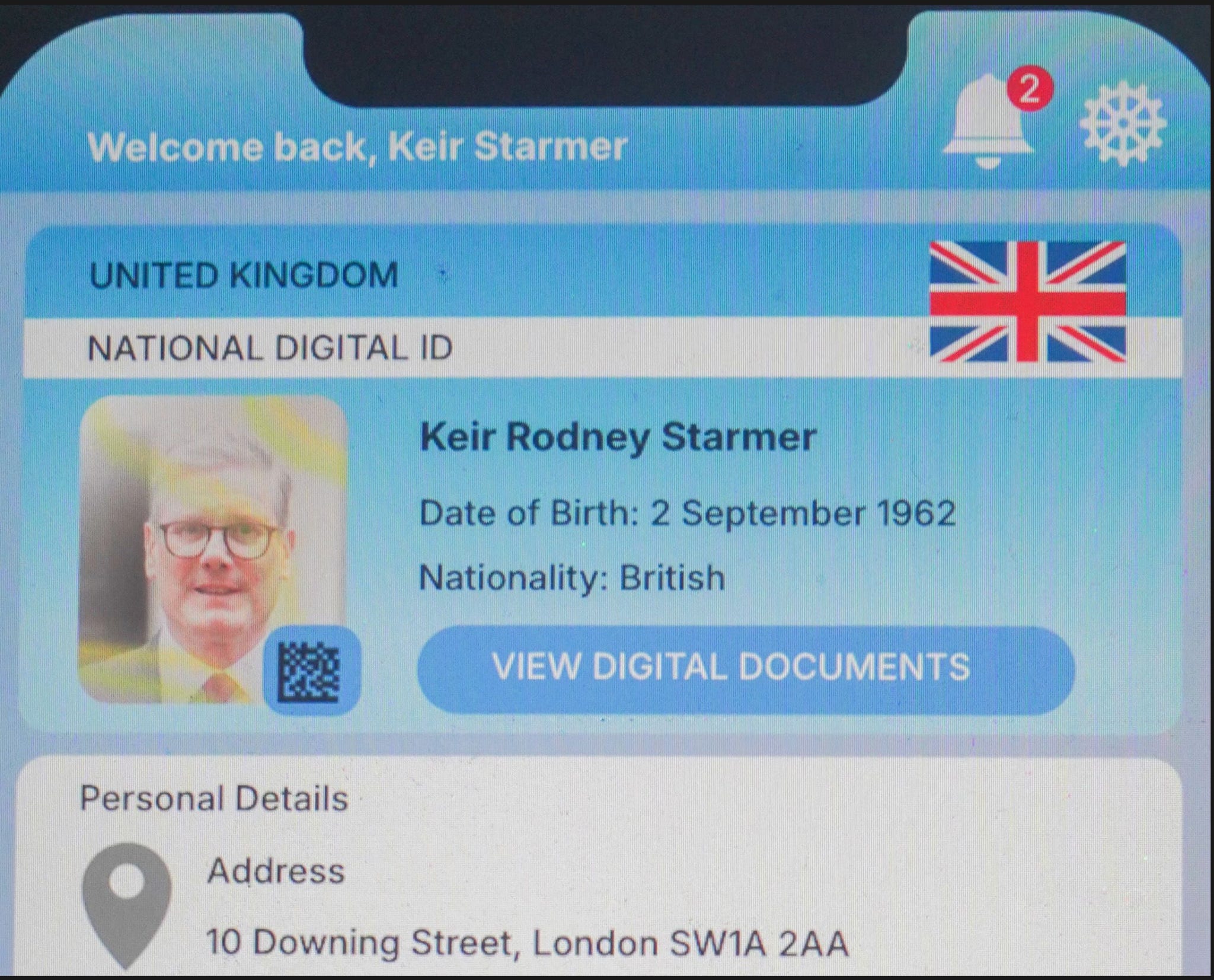
“No one makes arguments any more in politics.” I’ve heard this so many times in the last year.
There is some truth in it, though I am always suspicious of romanticising a bygone era where people did things perfectly.
But what’s definitely the case is a lot of politicians and policymakers seem to be taking the wrong lessons from the social media age. They have replaced long-form explanations with short-form content. Sloganising dominates, over the hard graft of winning hearts and minds.
Yet, politics at its most basic is about winning big arguments. You win arguments by making arguments. You win arguments by getting into a room with opponents and testing your arguments and honing them. You win arguments over a period of time because you show confidence and conviction that you have thought them through. In today’s politics, we need a new mix of great story-telling, building arguments and engaging content that draws people in.
In the first year of the Labour government, arguments were lost, because they weren’t made - for example, on welfare reform, cutting winter fuel allowance, raising national insurance.
ID cards: a case study
Today, ID cards look like going the same way.
Announced on the Friday before Labour Party conference, Keir Starmer hailed them as a way of getting tough on illegal immigration:
“Free digital ID will be mandatory for the right to work by the end of this Parliament. Let me spell that out: You will not be able to work in the United Kingdom if you do not have digital ID. It is as simple as that.”
The Department for Science, Innovation and Technology put out a useful explainer for the proposed ID scheme. It gave the main reason for the cards, not as illegal immigration, though this was mentioned, but:
“A new digital ID scheme will make it easier for people across the UK to use vital government services. The roll-out will in time make it easier to apply for government and private sector services, such as helping renters to quickly prove their identity to landlords, improving access to welfare and other benefits, and making it easier for parents to apply for free childcare.”
Since it was launched, ID cards have not been mentioned again, not even in the Prime Minister’s conference speech.
At the moment of writing this post, the government petition website has 2,784,481 signatories against ID cards. That’s a lot of people - in one week.
At the same time, net support for digital ID cards fell from 35% in the early summer to -14% at the weekend after the government’s announcement, according to polling by More in Common. In June, 53% of voters said they were in favour of digital ID cards while 19% were opposed. The explanation for the collapse appears to be its association with an unpopular Labour government. We know that the populists might not make many arguments for things but they certainly know how to mount a campaign against them. We also know that if politicians fail to make the argument, populists will fill the void.
There are also headlines that the Cabinet is divided on the issue and that some big tech companies who might have bid to run the scheme are worried about key technical and privacy issues. Opponents are moving fast. Columnists and experts are making the case against the cards because they risk creating ‘an enormous hacking target’, or ‘locking out the elderly from vital services’ or costing too much. Conspiracists are already running amok on social media. Others fear that an illiberal government in the future could use the cards for evil ends.
This post is not about the pros and cons of ID cards. I have always been a supporter, but have never been under any illusions that it needs a sophisticated and brilliantly executed campaign on both the substance of the policy and its communication, if it is ever to happen.
Now is the moment of maximum peril for the idea. The policy is teetering. It needs to be gripped.
The seven essentials for winning an argument
It’s easy to say: make an argument! But what does that look like? For me it has the following components:
Rolling the pitch. What is the problem that is being addressed? What is the robust diagnosis of what is going wrong?
Why this, why now? Why is this new policy the solution? Why is it better than other solutions? Why is now the time to introduce it?
The offer. What is the policy/principle/argument? What are its component parts? What will it look and feel like when implemented?
How it works. How will the new policy or approach work in practice? How will it be implemented and to what timescale?
Winners, losers, allies. Who does it apply to? Who doesn’t it apply to? Who are the winners? Who are the losers? Who support it? Who oppose it? Who will advocate for it?
Tripwires. What are the biggest hurdles to overcome? What are the most difficult arguments to win? Who are the hardest people to persuade? What are the implementation problems that could stall it?
The payoff. What are the tangible benefits? How are the benefits best described? How quickly will they be felt?
The big arguments to win this autumn
There are roughly 83 days until Christmas Day. The key to good strategic communications is deciding what you want to achieve in a given period and then planning the interventions to achieve it.
The government doesn’t need any more policy announcements. (With the exception of the Budget which inevitably contains new policy).
Instead it should see this period as one in which it is trying to make and win a few important big arguments. The case for ID cards is obviously one of them. But there are others.
To start with there’s the big overarching argument. Starmer set this out well at conference with a contrast between two visions of Britain. The Farage Britain of division and decline set against Labour’s vision of a modern, inclusive Britain that is ‘built for all’. That argument needs to be deepened, extended and explained in the coming months. What does that inclusive Britain look like? What are the symbolic reforms that will make it happen? There are important decisions to thrash out in taking forward the argument. Does the government want to make the charge of racism dominate? Or is that too easy for opponents to distort? What is the central attack on Farage? What makes the ‘Britain built for all’ line, not just an attack on Reform but the start of a big positive agenda for the country?
I would suggest there are other big arguments to get right between now and Christmas including the driving economic argument. This is about setting out Labour’s plan both for growth and living standards and fiscal responsibility. The tricky thing is the balance between these arguments. In the language of Gordon Brown, it’s got to be ‘prudence for a purpose.’ Both the prudence and the purpose have to be robust. This can not be done by putting the kitchen sink into the Budget and neither rolling the pitch beforehand or campaigning for the Budget measures after. There needs to be a three month plan with major interventions that pave the way for the Budget. The aim should be that by Christmas there is a consensus that the economy has been gripped and there is a credible plan for a stronger economy in the coming years.
In addition the Prime Minister has kicked off a powerful argument about educational opportunity. The boldest policy from the Labour conference was replacing the 50% higher education target with a new two-thirds target for higher education and gold standard apprenticeships. The speech had a few lines on this. There now needs to be a series of interventions that explain the argument. Not only does the new target have far reaching implications for reforming the school curriculum and transforming further education. But along with the new ‘Youth Guarantee’, it has the potential to help the one million young people who are currently not in education, employment or training (NEET). This could be a flagship policy for tackling the disaffection that is fuelling the rise of Reform and finally offering ‘parity of esteem’ between academic and vocational education. This is a hugely positive story for the government and it would be a tragedy if we hear no more on it for several months.
This autumn the Labour government needs to make and win these big arguments. To do so will require one other important change: the complete overhaul of the government grid. That is something I will turn to in a future post.
You’re right about the policy on tackling NEETs and offering new “gold standard” apprenticeships are an absolute vote winner if Pat McFadden now doubles down on the policy through rapid and scaleable implementation. But alas, to date, this government has been incredibly slow on skills policy reform (much like the last). It has been introspective and technocratic. If anything, apprenticeship quality has been reduced with new 8 month duration schemes. Starmer promised an “imminent” skills White Paper during his Farnborough Air Show speech, July 2024. Over a year on, no sign of it except a vague policy ambition that was pre announced by Sunak and Gavin Williamson before that. This is the civil service at its performative worst. Handing politicians headline grabbing policy announcements then failing to follow through. I’ll be writing a piece next week on my own Substack on what the govt needs to do to meet the scale of the skills challenge ahead and what “gold standard” means in practice.
But I thought there weren't going to be ID cards, merely a digital ID. I'm content with a digital ID, but not with an ID card.
Several comments on here are about ID cards, so are presumably irrelevant. Confusion helps no-one.